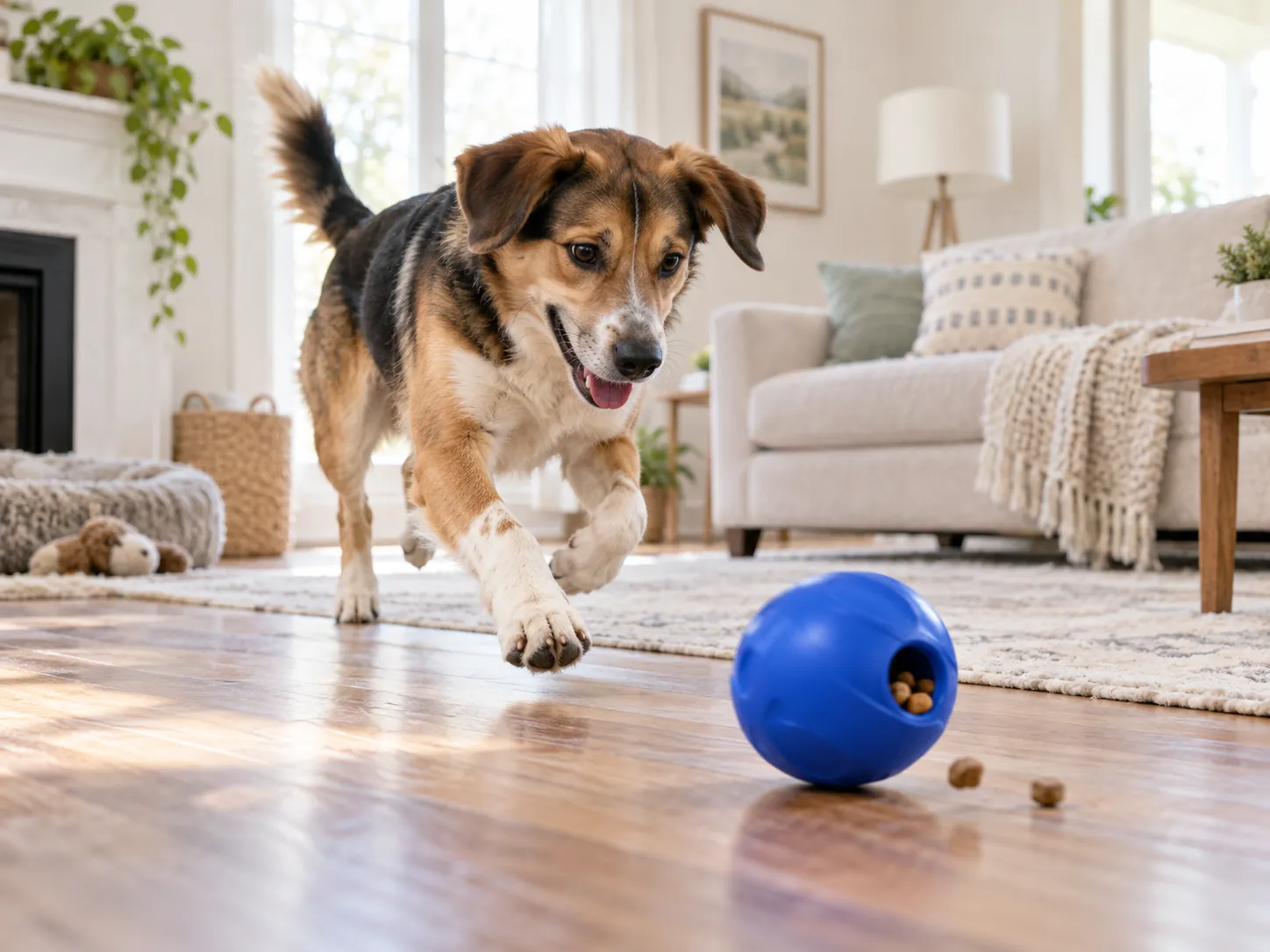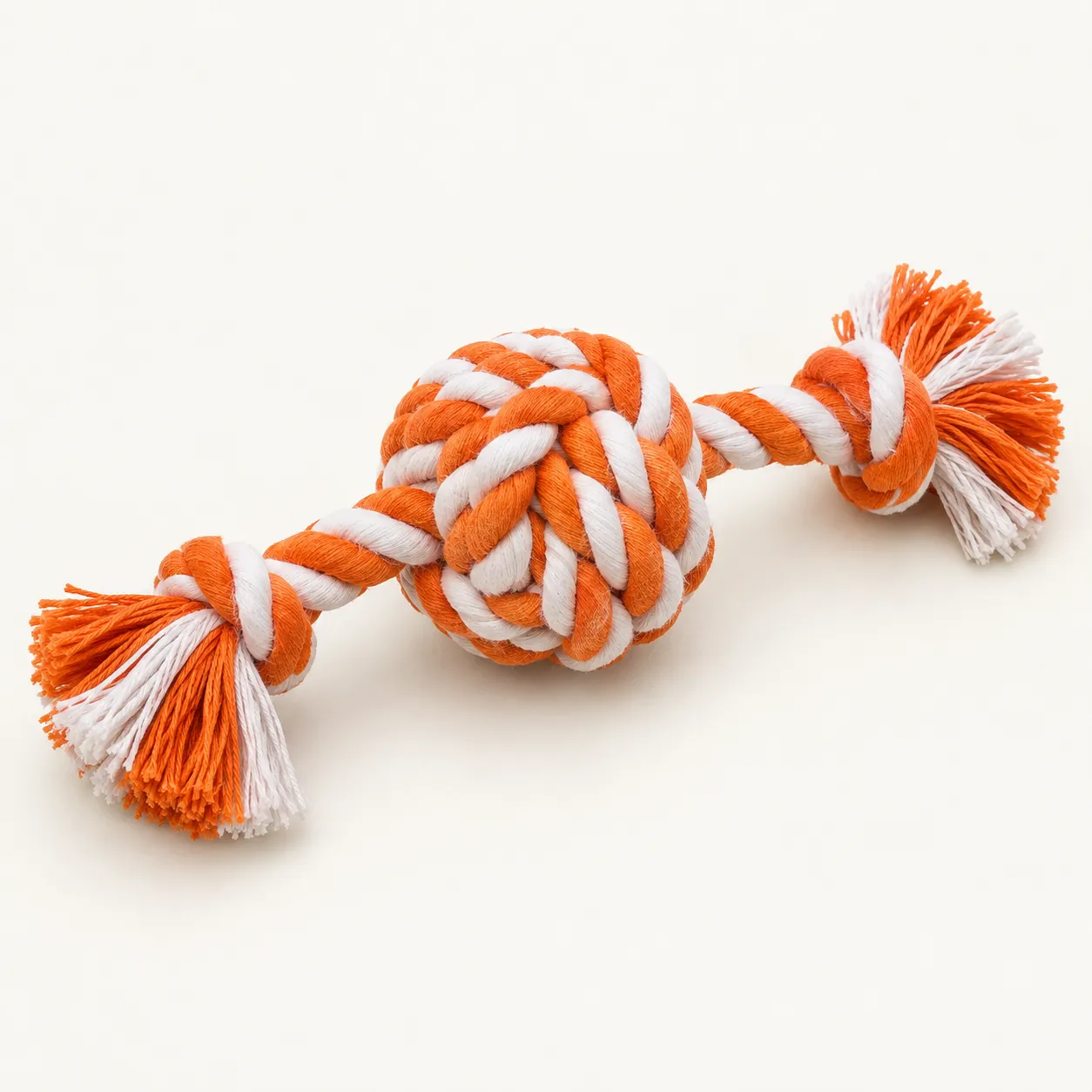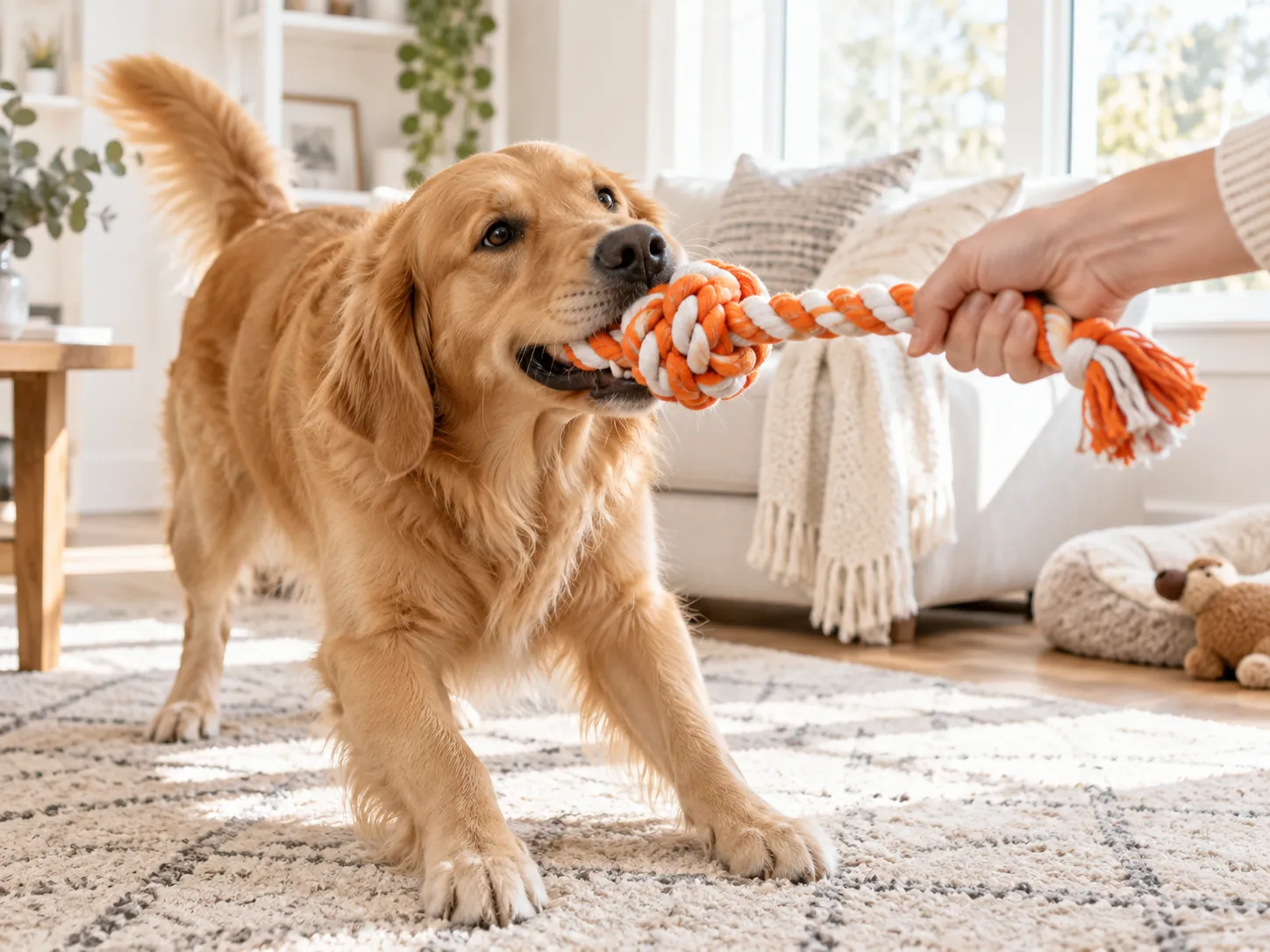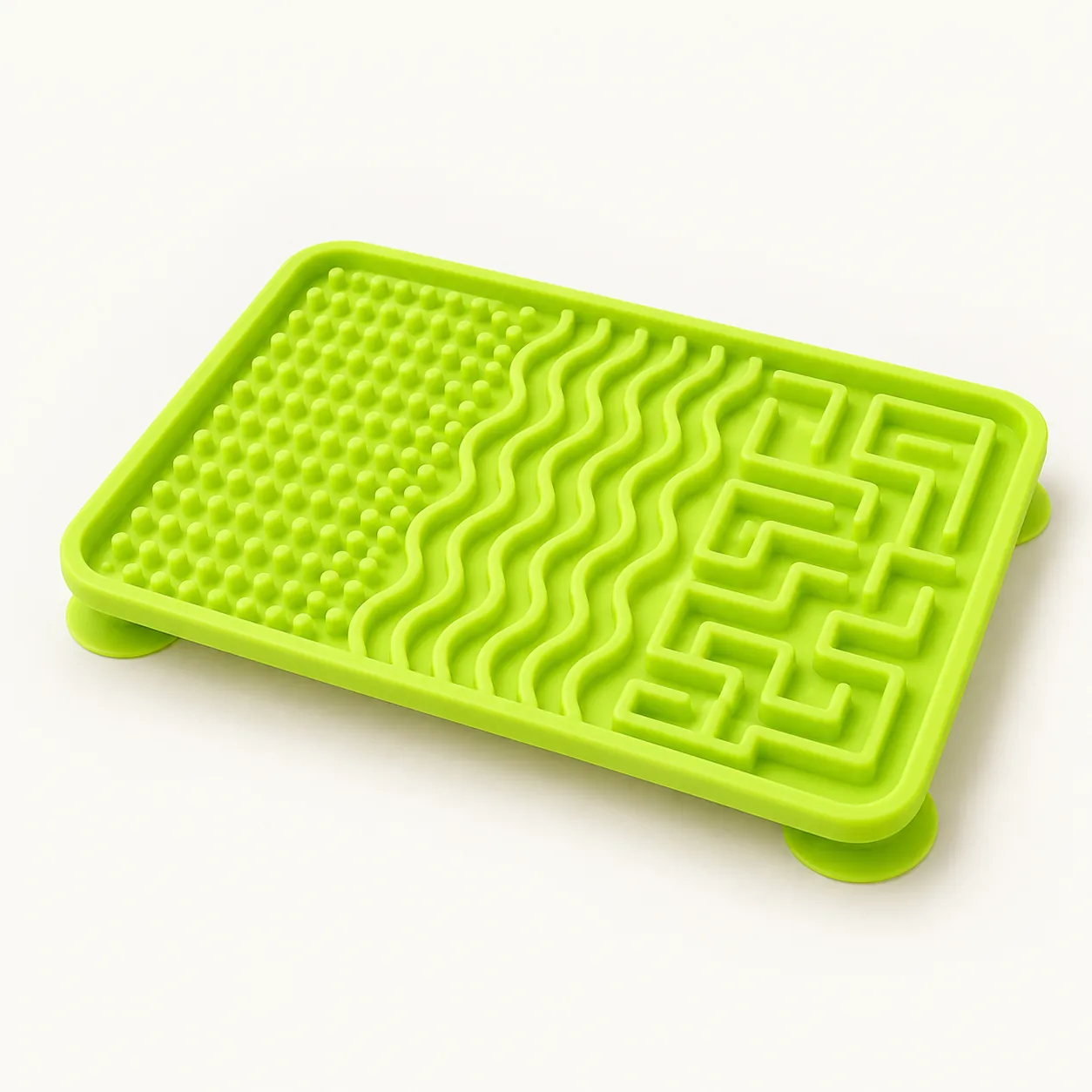
Choose a dog toy that your dog cannot swallow whole, can use comfortably, and cannot quickly break into swallowable pieces. Read actual dimensions and the maker's intended-use instructions, then supervise the first sessions to see what your dog does with it. Size is a safety decision, not just a label on a package. The ASPCA's chew guidance recommends matching items to a dog's size and chewing habits and observing use.
Why toy size is more than breed size
Two dogs of similar weight may have different muzzle shapes and very different ways of playing. One might carry a ball gently; another may compress it and try to swallow it. A toy must fit the dog's mouth and the activity. The AKC's crate guidance says chew toys should be large enough that a dog cannot swallow them whole, and notes that powerful chewers can tear some materials quickly.
Think about the toy's smallest usable form, not only its size when new. Could a knot unravel? Could a squeaker or detachable piece become exposed? Could a ball be compressed enough to lodge in the mouth? The AKC's discussion of tennis balls explains why even a familiar toy can pose choking and dental risks for some dogs.
| Toy type | Size question | Condition question |
|---|---|---|
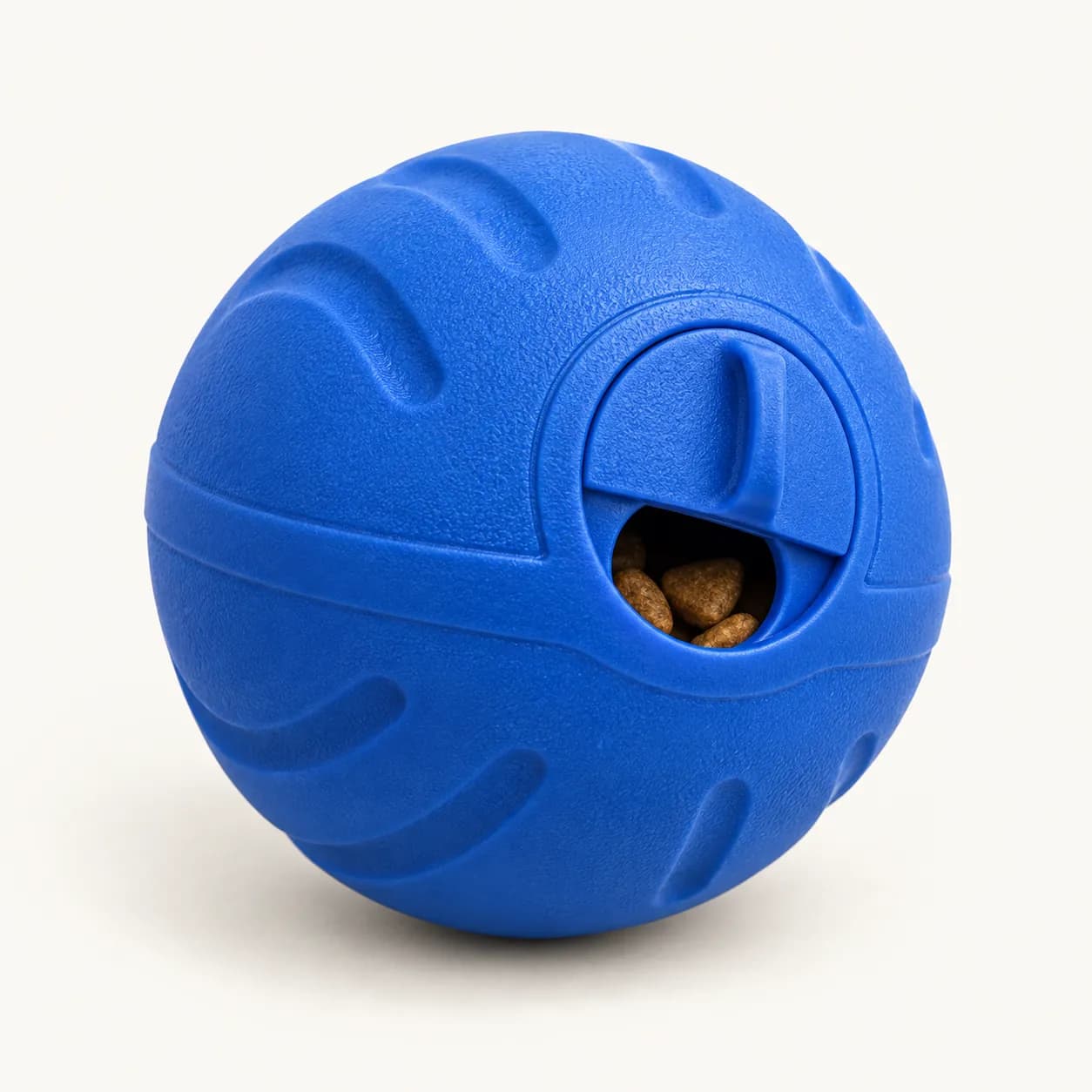
| Rolling food ball | Can the dog mouth or swallow it whole? | Can the opening or shell break? |
| Rope tug | Is there space between hand and mouth? | Are strands or knots loosening? |
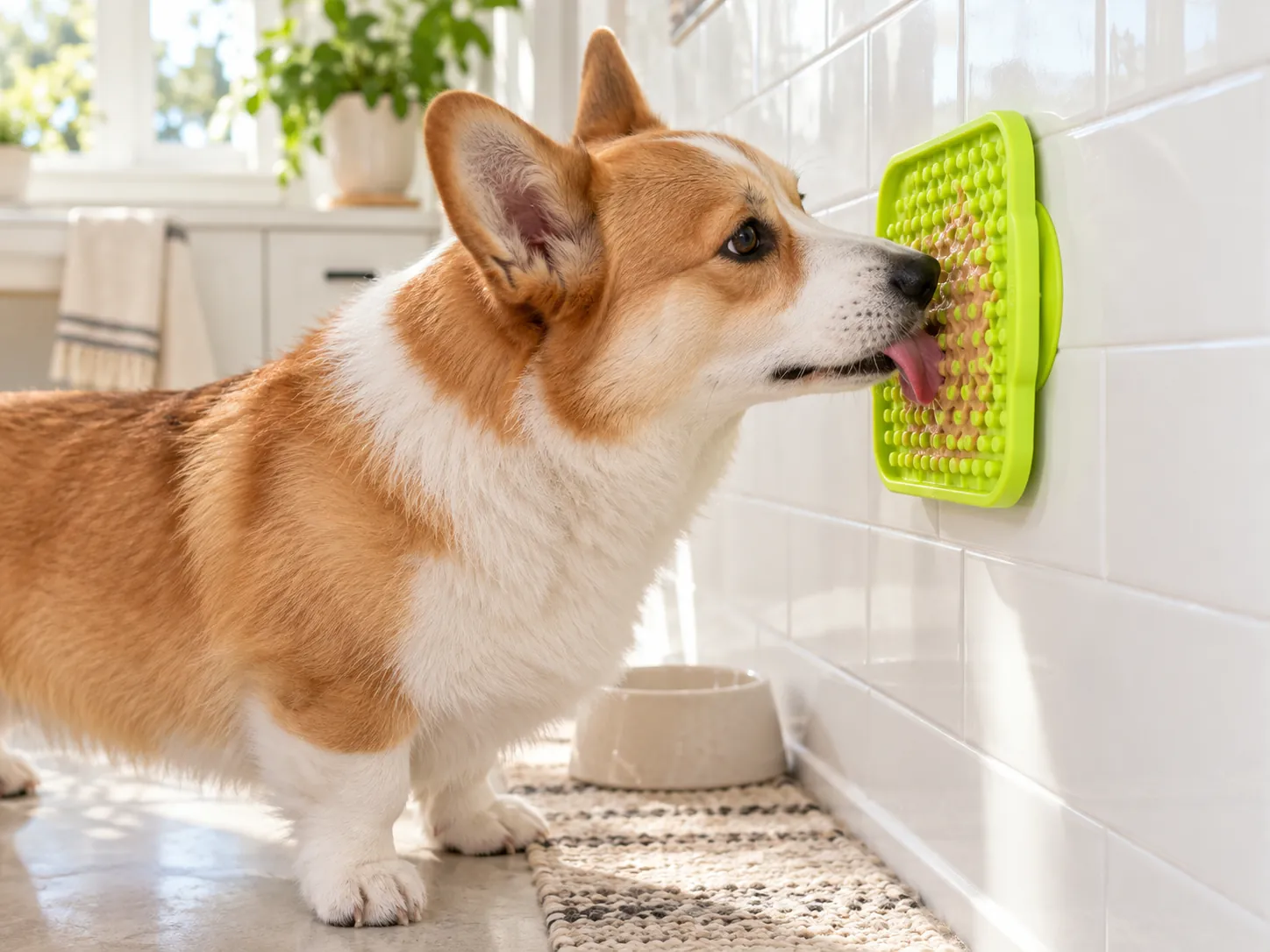
| Lick mat | Can the dog use it without folding and biting? | Are edges torn or peeling? |
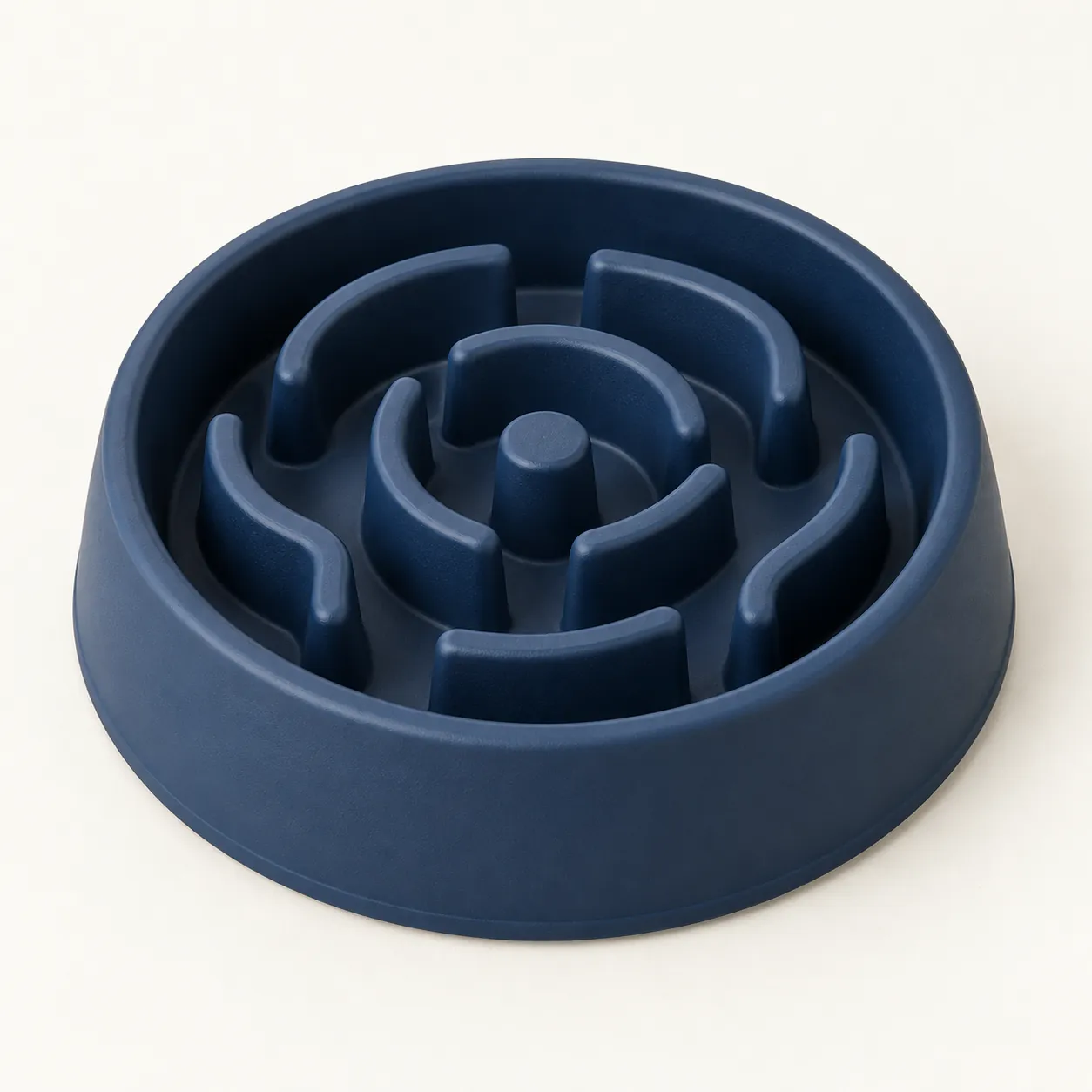
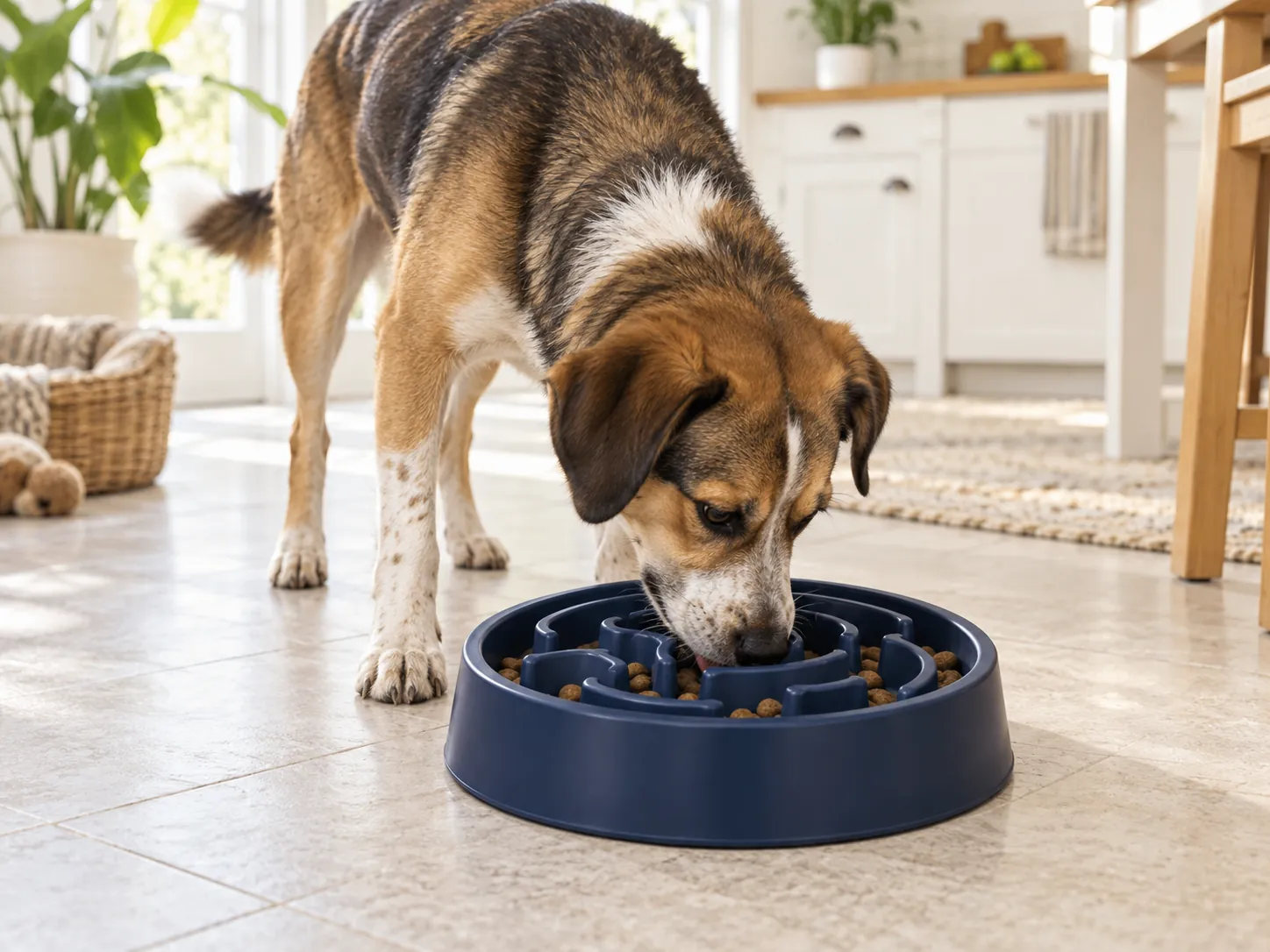
| Slow bowl | Can the muzzle reach food comfortably? | Are ridges cracked or sharp? |
Check the real product, not a photograph
Product images can suggest a size but cannot establish fit. Read measurements in inches, note whether they refer to the whole toy or one part, and compare with the dog's mouth and play behavior. Size labels such as small and large are not standardized across all toys. Ask the maker for missing measurements rather than guessing. For Pawplay's pre-launch items, final dimensions and materials must be confirmed at launch; current illustrative renderings are not evidence of physical scale.
Consider the intended action as well. A ball that is suitable for a supervised floor roll may not be appropriate as an unattended chew. A rope that works well for a controlled tug may be a poor choice for a dog that shreds fibers. A lick mat is a food surface, not a chew item. A slow bowl should let the dog access its meal without scraping its muzzle or tipping the bowl.
A first-use safety check
- Read the age, size, intended-use, and care guidance from the manufacturer.
- Inspect the item for damage, loose parts, or sharp areas before offering it.
- Give it to your dog in a clear space while you watch closely.
- Observe whether your dog carries, licks, paws, tears, crushes, or tries to swallow it.
- Remove the item if a piece detaches, the dog chews an unintended material, or the fit seems wrong.
Supervision is especially important with a new design because your dog may use it differently from the product photo. Cornell's veterinary guidance advises avoiding small toys a dog could swallow and supervising play. A successful first session does not eliminate the need to inspect later sessions.
Material and chewing style
No single material works for every dog. A hard item may be durable yet unsuitable for a dog that risks tooth damage; a soft item may be comfortable yet easily shredded. Match the item to what your dog actually does, not a broad claim such as “heavy chewer.” The ASPCA warns that fragments and significant pieces can be swallowed and cause serious harm. If you are unsure about a chew for a dog with dental issues, ask your veterinarian.
Do not use household objects as substitutes without considering swallowing risks. String, foam, buttons, and small plastic parts can change a game into a hazard. If a dog has swallowed a piece or shows choking signs, contact a veterinarian promptly. A guide cannot tell from a photo or weight chart whether an item is suitable for that individual dog.
When to retire a toy
Make inspection a habit before and after play. Retire an item when it has cracks, rough edges, exposed filling, missing parts, or loose fibers. A ball that has become smaller through damage may now be swallowable. A rope can look largely intact while a single loosened strand is available to pull out. A food toy with deep damage may also become difficult to clean.
Keep separate rules for play and storage. Put away interactive ropes, mats, and puzzles after a supervised session. For any item you consider leaving out, first observe the dog's behavior over repeated uses and follow the maker's directions. The AKC recommends watching a dog with any new toy style before assuming it suits that context. When the evidence is unclear, choose supervision.
A better shopping question
Instead of “Which size does my breed need?”, ask: “Can this dog use this exact toy as intended, today, without swallowing it or breaking off pieces?” That question directs you toward actual dimensions, the dog's behavior, the play setting, and repeat inspection. It also makes it easy to walk away from a toy that does not fit, even if the label or color is appealing.
If a product page leaves out its measurements or care instructions, keep looking or ask the seller for them. A photograph beside a dog is not a substitute: camera angle, dog size, and perspective can all make an object seem larger or smaller. Save the information for the exact version you plan to use, because a later size or material change can alter the decision. Recheck fit as a puppy grows or a dog's chewing habits change. The same toy can move from suitable to unsuitable over time.
Common questions
It should be too large to swallow whole while still being comfortable for that dog's mouth and intended game. Check the maker's size guide.
No. Size labels differ by maker; compare actual dimensions with your dog's mouth and chewing behavior.
Replace it when pieces loosen, edges become sharp, material frays, or the item is small enough to swallow after wear.
First observe how your dog uses it and follow the maker's instructions. No toy is appropriate for every unsupervised dog.