For a rainy day indoors, choose one low-risk activity your dog enjoys: a simple food search, a gentle tug game, or a supervised food puzzle. Clear enough space, start easy, and stop if the dog becomes frustrated or begins swallowing materials. Indoor enrichment adds variety when outdoor time is limited; it does not remove the need for bathroom breaks, suitable movement, and rest.
Start with the room, not the game
Indoor play changes the physical setting. A slippery floor, a low coffee table, or an excited dog in a narrow hallway can turn a harmless idea into a collision. Move breakable objects, choose a surface with traction, and keep throws and rolls short. A calm search game may suit a small apartment better than a chase game. If several dogs are present, separate them for food activities when sharing creates tension.
The ASPCA's at-home activity suggestions include sniffing, food puzzles, and interactive activities. They are options, not a checklist to complete in one afternoon. A dog may enjoy looking out a window, resting near you, or taking a short weather-appropriate outing more than another indoor puzzle.
| Indoor option | What you need | Best first adjustment |
|---|---|---|
| Easy scent search | Part of normal kibble | Leave pieces visible |
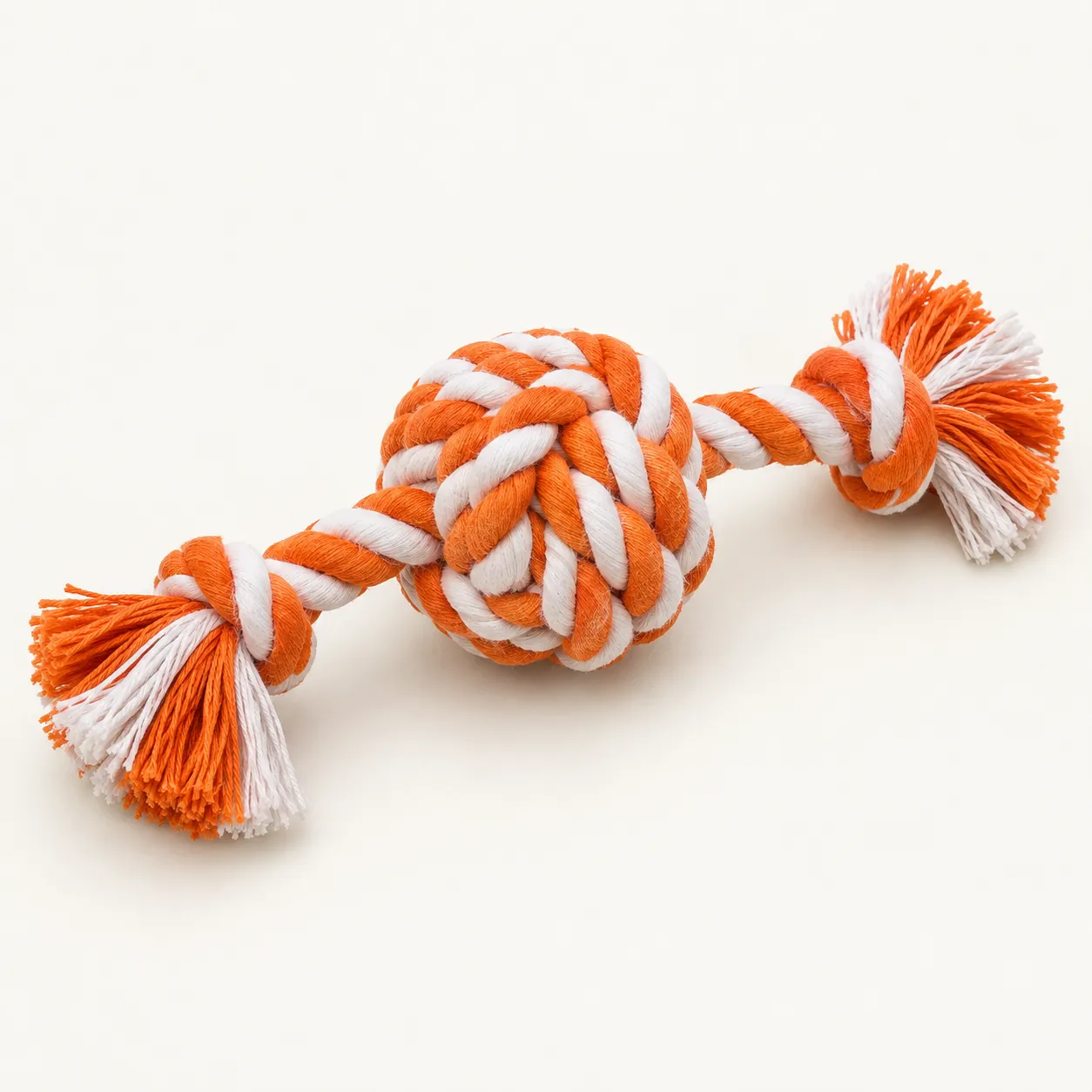
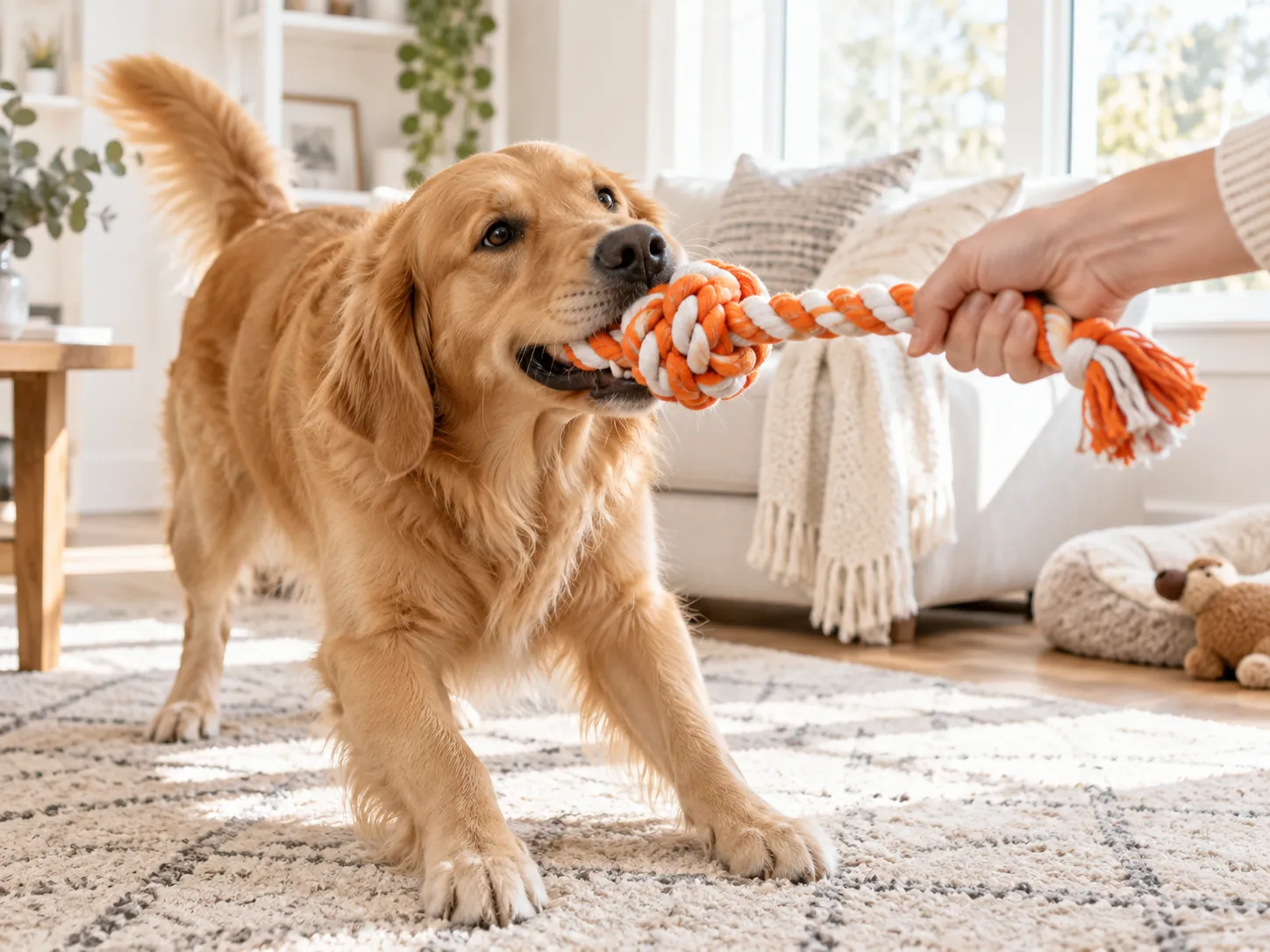
| Gentle tug | Sound toy and clear floor | Lower resistance; pause often |
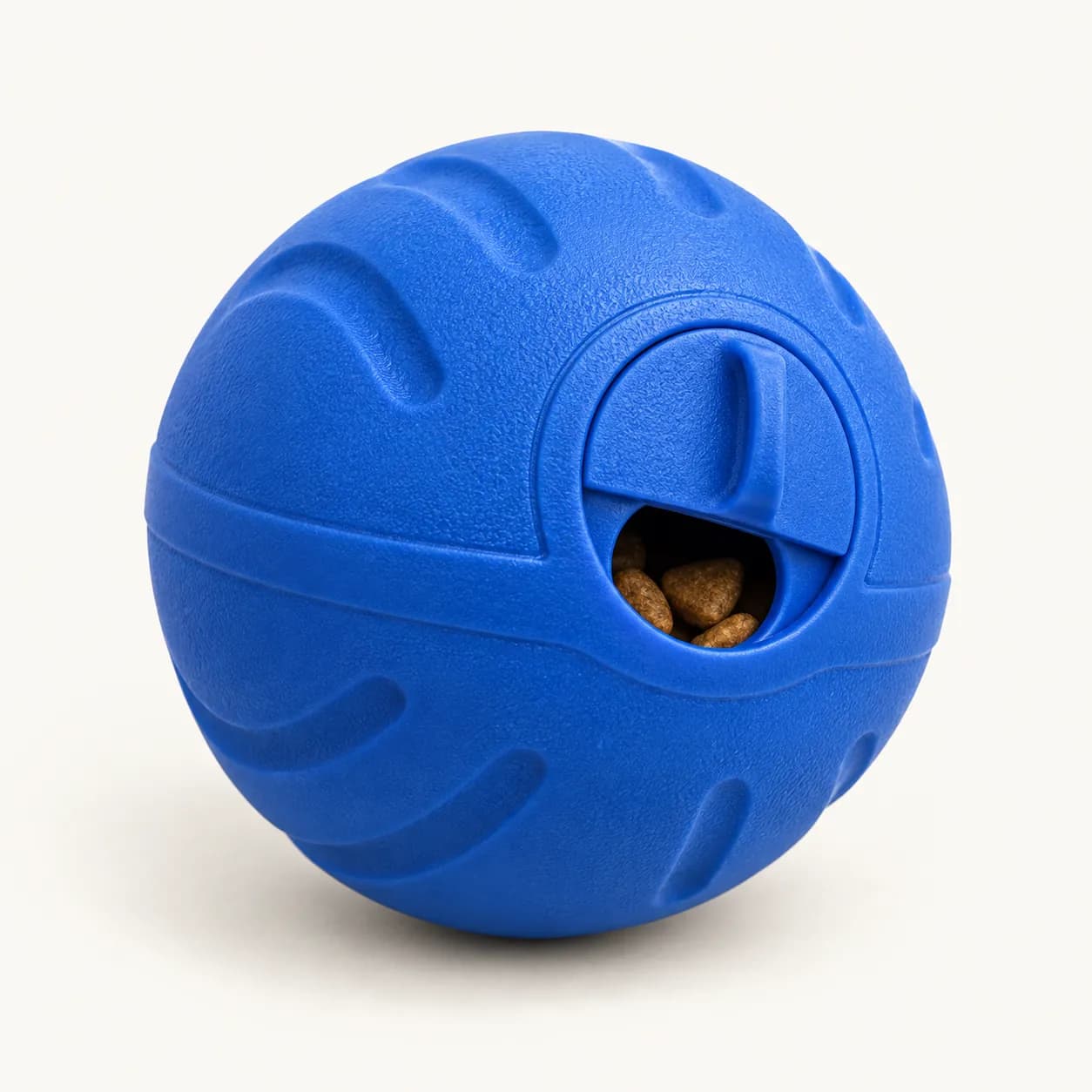
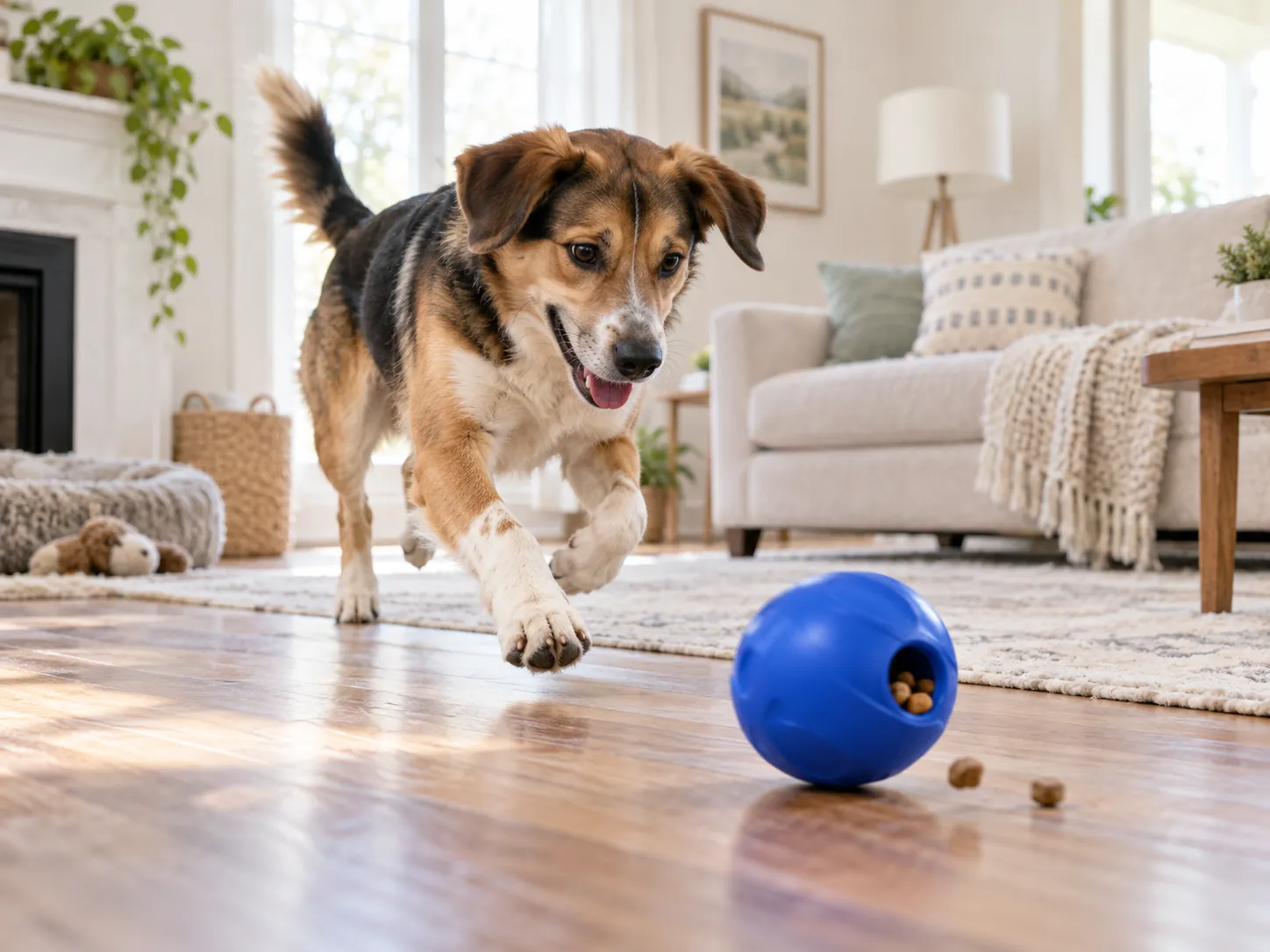
| Rolling dispenser | Suitable food toy and open floor | Make release easy |
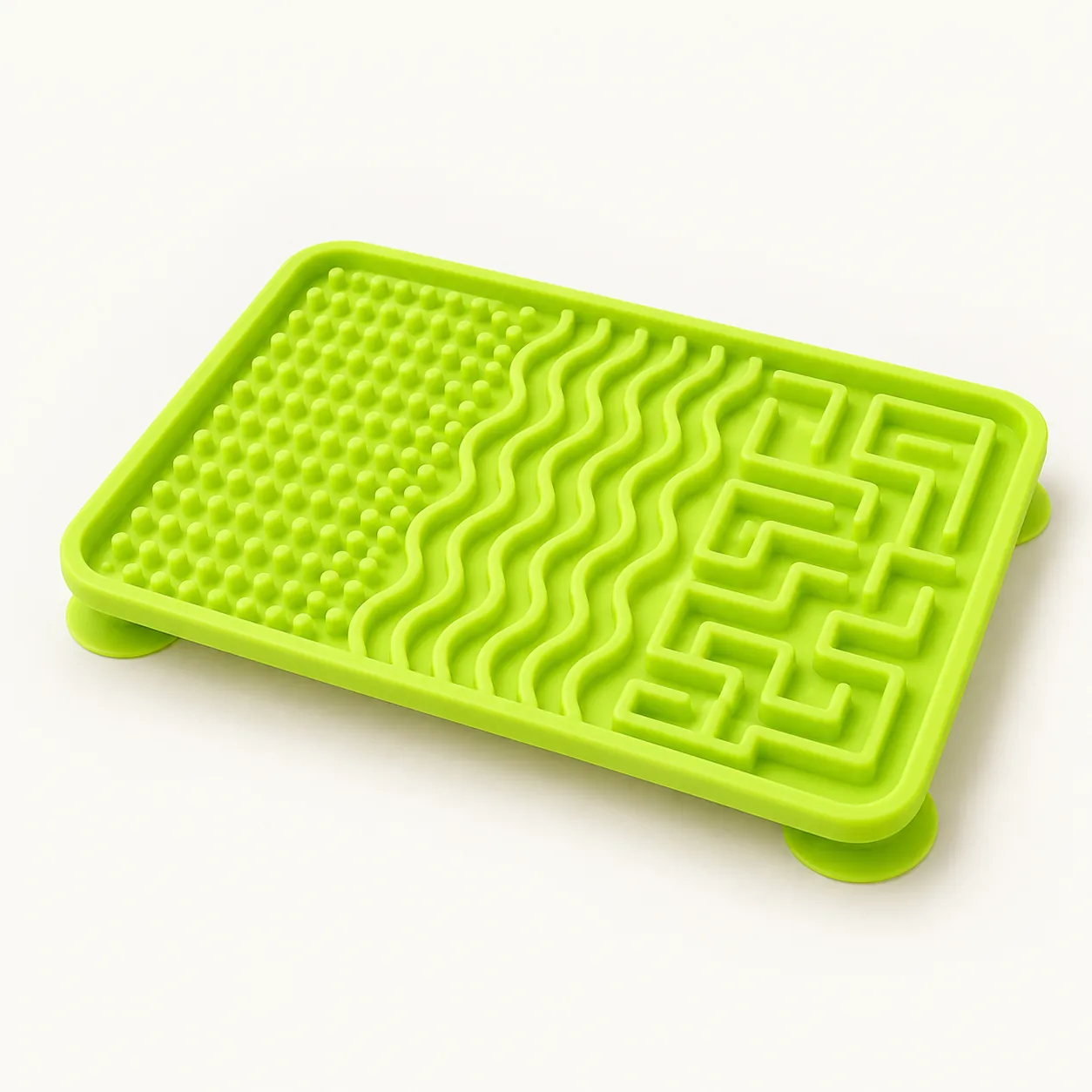
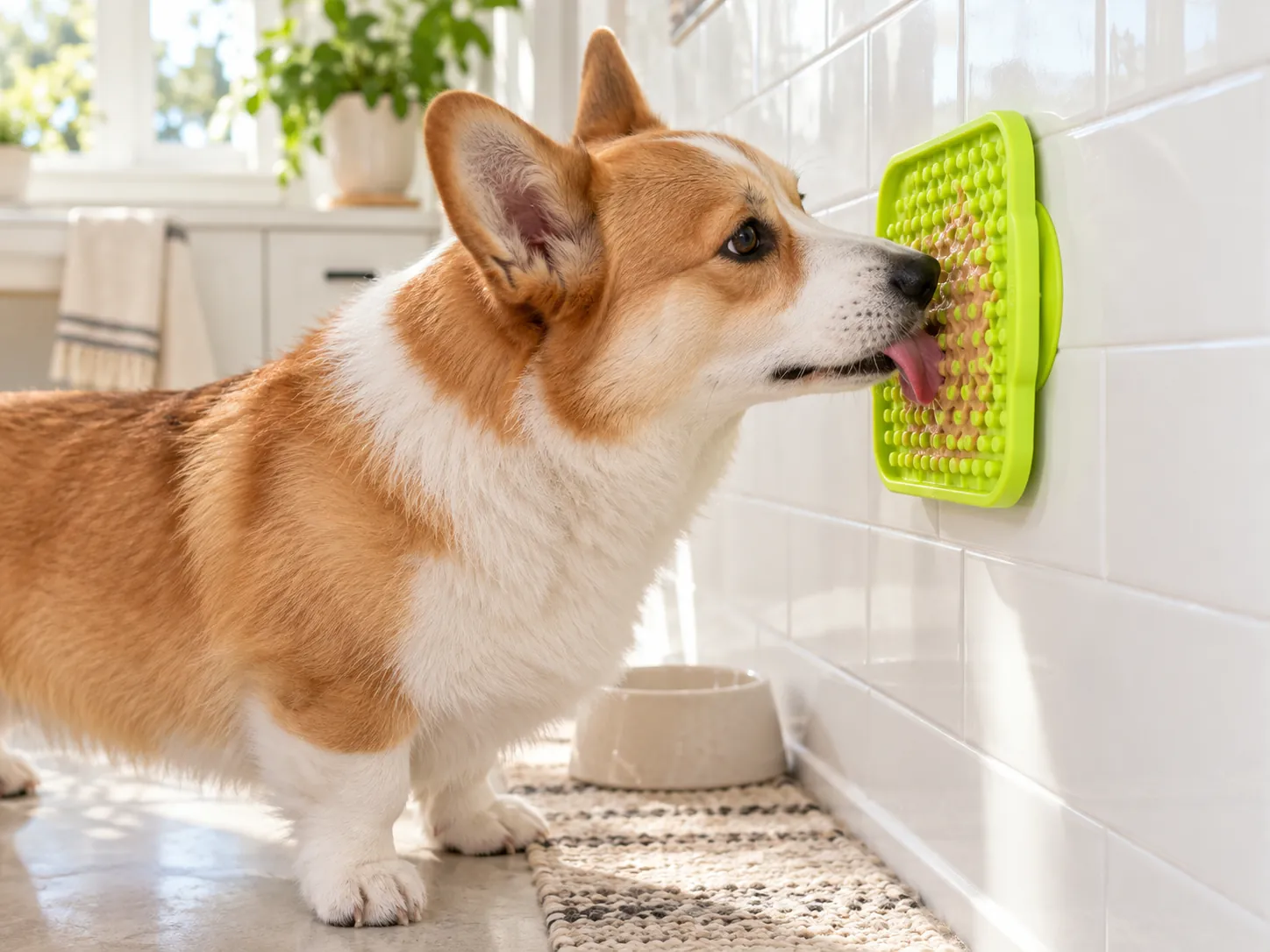
| Lick surface | Clean mat and familiar food | Use a thin spread |
| Reward-based cue game | Small food rewards or a toy | Ask for a familiar action |
Try an easy scent search
Start by letting your dog see a few pieces of kibble placed on a clean floor. Say a consistent invitation such as “find it,” and allow the dog to investigate. Once that is easy, place food just out of sight behind a chair leg or beside a safe piece of furniture. Avoid hiding food where the dog must climb, scrape at cords, or pull apart objects. Use part of the regular meal rather than adding a second meal through the game.
This works even without a special toy. The ASPCA's canine enrichment guide offers simple food activities and asks for close, active supervision when DIY objects are accessible. For a dog that prefers sniffing to running, the search itself may be the interesting part. End while the dog is still finding food willingly, and clean up pieces you placed but the dog missed.
Add a supervised food puzzle
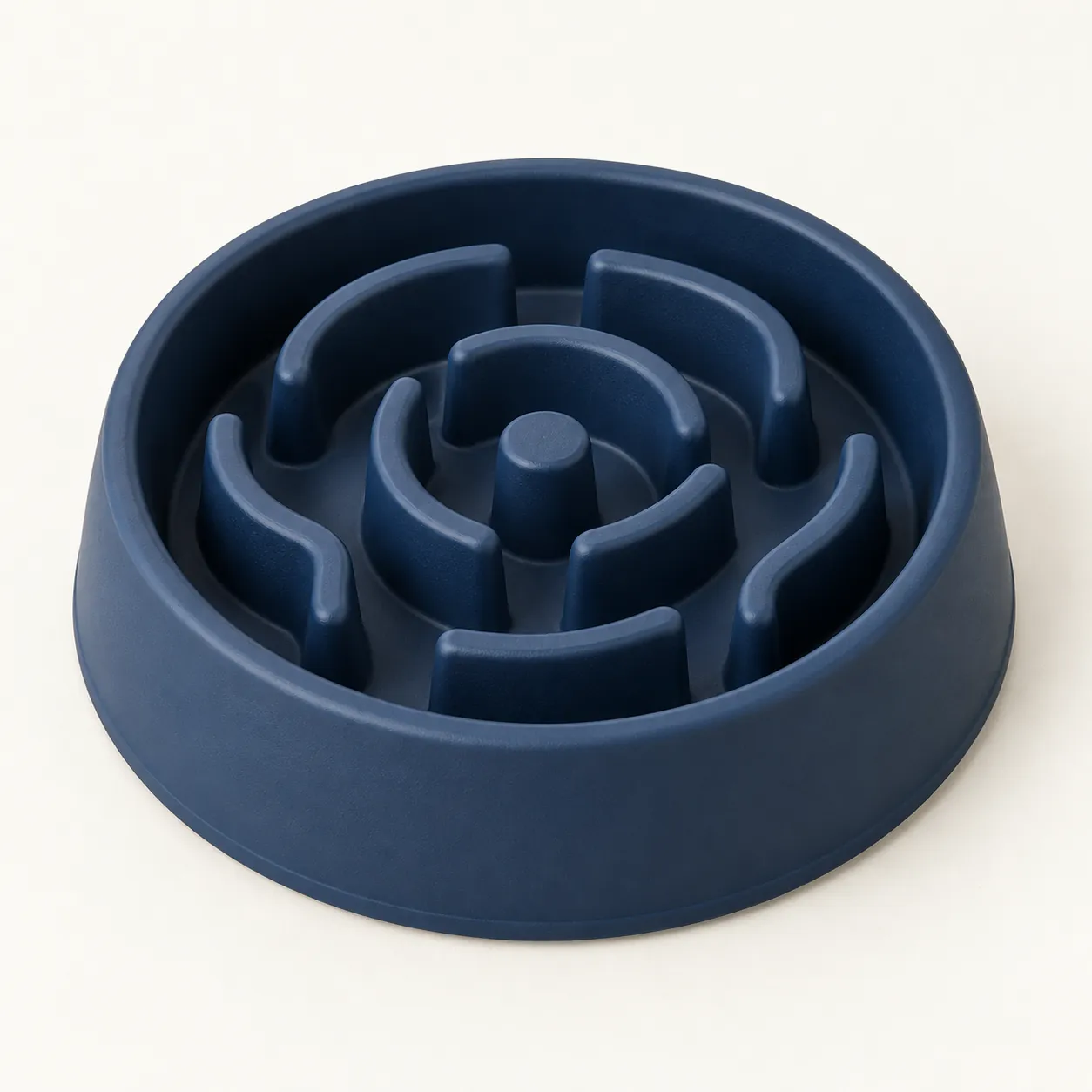
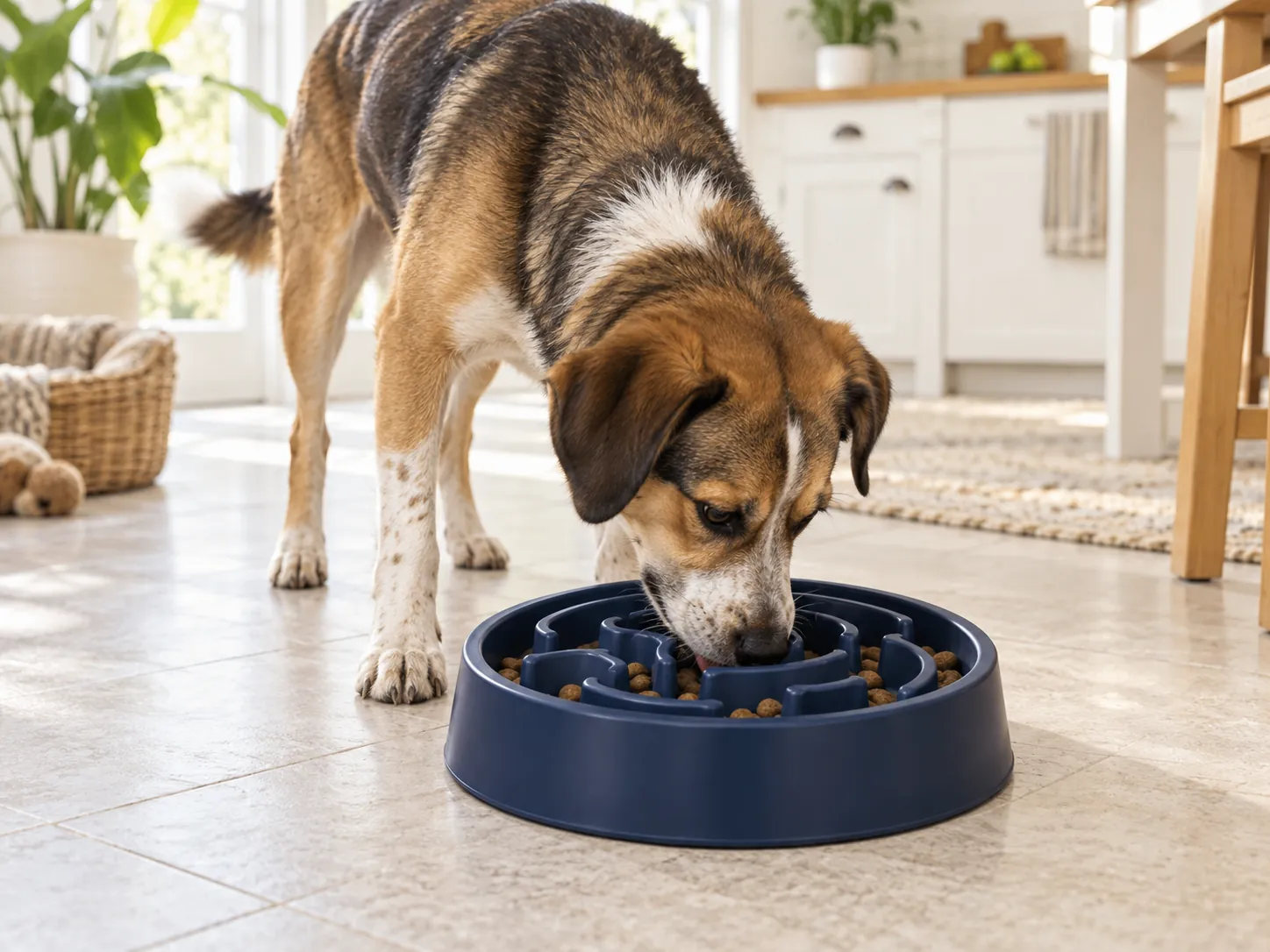
The AKC describes food puzzles as devices that make dogs work for food. A slow bowl, treat-dispensing ball, or easy household puzzle can turn part of dinner into a task. Begin with an easy setting so the dog discovers how food appears. If the dog tips or bites the item in frustration, simplify the challenge or switch games.
Pawplay's planned Treat Tumbler and Slow Bowl illustrate rolling and stationary puzzle formats. They are pre-launch, with final specifications still to be confirmed. You can test your dog's interest now using suitable toys already at home or a simple supervised food search. Do not buy a more complex puzzle just because the first one took your dog little time to solve; variety and comfort matter more than difficulty.
A gentle indoor tug option
Tug needs less floor space than a full-speed chase, but it still needs traction and care. Invite your dog to engage with a suitable toy. Hold it low, avoid lifting or twisting the dog, and pause to trade for a reward. Put the toy away when play ends. If your dog has a physical limitation or seems uncomfortable, choose a calmer activity and ask your veterinarian about suitable movement. A tug game should never require you to overpower the dog.
Do not leave a rope available for a dog that shreds and swallows fibers. Inspect the toy before and after play. Cornell's veterinary guidance advises avoiding toys small enough to swallow and supervising play. Those checks matter just as much indoors as outside.
A no-purchase rainy-day sequence
- Do a short, easy food search with part of the normal meal.
- Pause for water and observe whether your dog wants more activity.
- Offer either a gentle tug or a familiar training game.
- Finish with a predictable cue and give the dog room to rest.
There is no need to fill every hour. If the dog prefers to settle, allow it. If outdoor activity remains possible, a short walk with suitable gear may still be useful; judge weather and footing for your own situation. Indoor activities work best as one part of a flexible day.
DIY materials require a higher level of attention
Cardboard boxes, paper rolls, and towels can make inexpensive puzzles, but they are only appropriate while you are actively watching. Remove them if your dog tears and swallows material, pulls off tape, or gets caught in a loop. The ASPCA explicitly warns owners to supervise DIY enrichment and take an item away if a dog attempts to ingest it. A ready-made puzzle also needs inspection and supervision during introduction.
The useful rainy-day question is not “How can I exhaust my dog indoors?” It is “What engaging activity fits this dog and this space today?” Start small, keep food within the dog's normal plan, and let the dog's response tell you when the activity is enough.
Weather also changes your own available time. If you only have a few minutes, choose one easy search instead of assembling a complicated obstacle course. If you have more time, repeat a favorite game after a rest rather than continuously raising the difficulty. Put away food and toys between sessions, check that no kibble remains under furniture, and return the room to its usual use. A simple activity that you can supervise and clean up is more useful than an elaborate idea you cannot safely manage.
Common questions
Try a simple scent search, gentle interactive play, or part of a meal in a supervised puzzle. Match the activity to your space and dog.
They can add variety when weather limits time outside, but they do not automatically replace exercise, bathroom breaks, or a dog's normal routine.
Use an easy search with part of the dog's normal meal, or practice a familiar reward-based cue in a clear indoor space.
Only with close supervision, and only if your dog does not ingest the cardboard or other materials. Remove the item if chewing turns to swallowing.