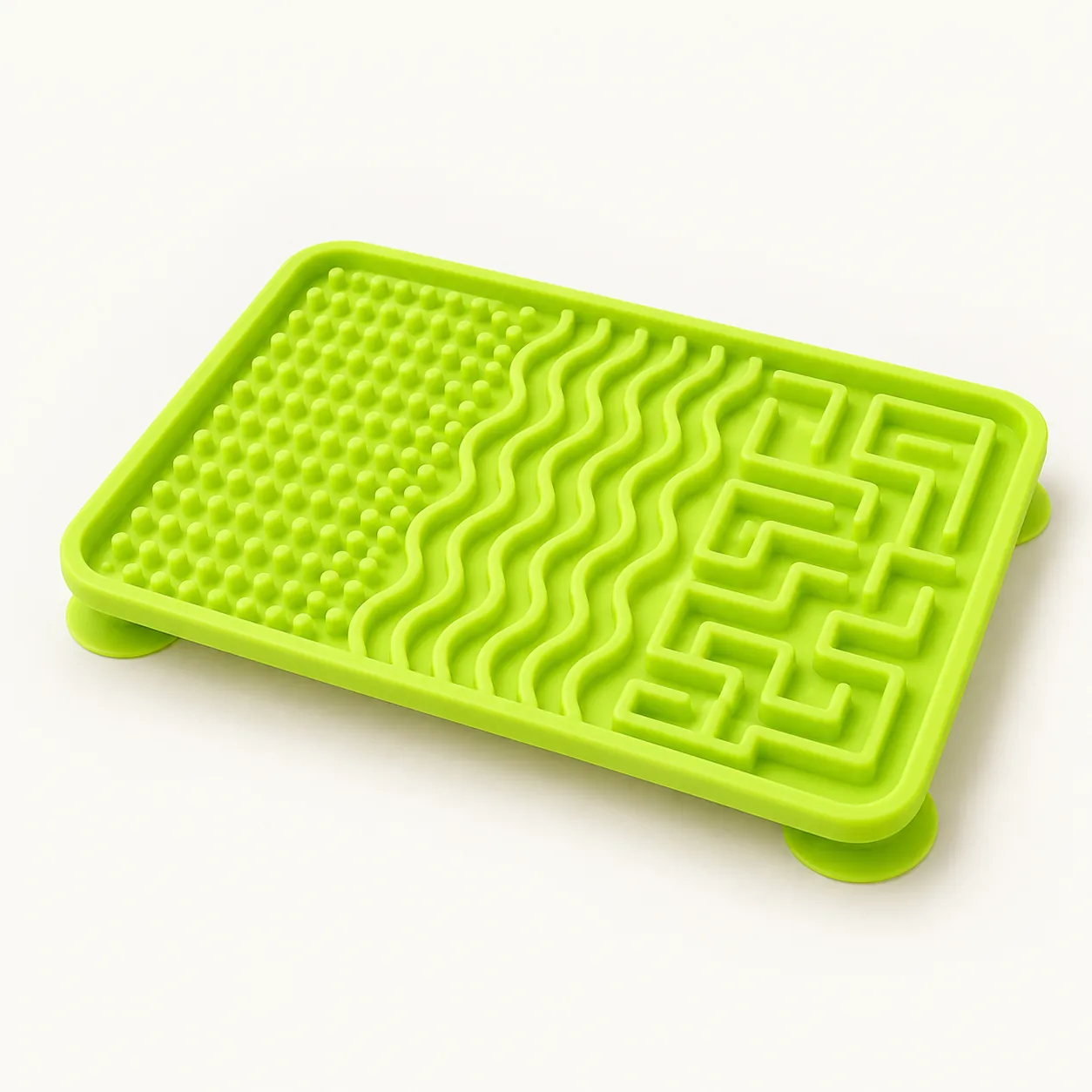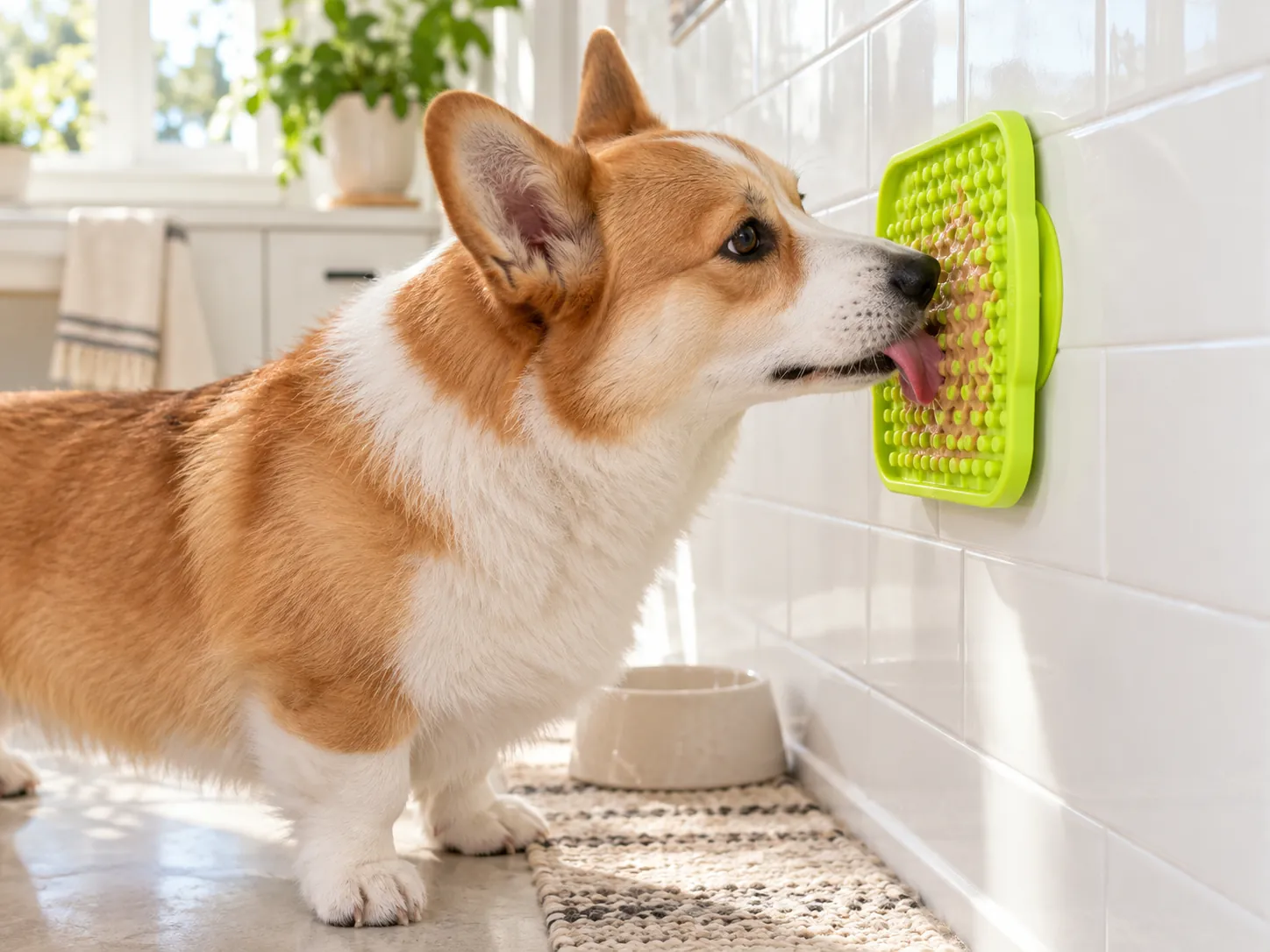
A lick mat is a textured food surface that lets a dog work through a thin layer of food by licking. To use one, start with a food your dog already eats, spread it lightly, set the mat on a stable surface, and stay close enough to stop play if the dog starts chewing the mat. It is an enrichment option, not a remedy for fear or a reason to leave a dog alone with a food-covered object.
How a lick mat differs from a bowl
A standard bowl makes food easy to reach. A lick mat holds a small amount in grooves, so the dog has to explore the surface to get it. Some mats can also spread a portion of a meal over a larger area. The AKC's lick mat overview describes these uses and stresses supervision, cleaning, and replacing damaged mats. A mat is not automatically the right feeder for every meal or every dog.
The best first test is whether your dog licks the food while leaving the mat itself intact. If your dog grabs an edge and tries to eat the material, take it away. Try a different enrichment format, such as a suitable bowl or a short food-search game. A food activity should not become a test of whether a dog can be prevented from swallowing its equipment.
| Food option | Why consider it | Check first |
|---|---|---|
| Regular wet dog food | Familiar diet and easy to spread | Account for the meal portion |
| Softened regular kibble | Uses food already on hand | Prepare and store it hygienically |
| Plain, dog-suitable pumpkin | Adds a different texture | Ingredients and dietary fit |
| Plain yogurt | Some dogs enjoy a small amount | Tolerance and added sweeteners |
| Peanut butter | Sticky texture | No xylitol; suitability and portion |
Introduce it in small steps
- Read the particular mat's label for intended use, temperature limits, and care instructions. Check for cracks, loose pieces, or sharp edges.
- Put a small smear of familiar food in the center. Leave some texture exposed so your dog can discover the food without a difficult task.
- Place the mat on a clean, stable floor and invite your dog to investigate. Keep other pets away if sharing food creates competition.
- Watch closely. If your dog licks calmly, let the session continue. If it bites, folds, or shreds the mat, remove it without a struggle.
- When the food is gone, pick up the mat, clean it, and let it dry before storage.
This is a starting routine, not a required training sequence. A dog may need help finding the food or may simply prefer another activity. The ASPCA's DIY enrichment advice asks owners to supervise accessible food activities and remove items a dog tries to ingest.
What to spread and what to avoid
Using part of the dog's usual food keeps the activity simple. If you try a human food, read every ingredient and use only something appropriate for your dog. The ASPCA's xylitol warning notes that this sweetener can appear in sugar-free foods, including some peanut butter, and is dangerous to dogs. Skip products with xylitol. Also avoid assuming that a social-media recipe is suitable for your dog's size, health, or prescribed diet.
Thin layers are easier to clean and easier for a new user to understand. Count food used on the mat as part of the normal day's intake. If your dog has a food allergy, digestive concern, or a prescribed diet, ask your veterinarian before adding new ingredients. Do not hide medication in a mat unless your veterinarian has said the food and delivery method are suitable; a dog may not finish every groove.
Freezing: optional, not the first move
Freezing can make a spread stay in place longer, but only use it when the manufacturer's instructions allow it. Try the mat at room temperature first. A dog that has never used one may find a frozen surface confusing or may bite it to get at the food. Let the dog set the pace, and stop if it chews the mat or seems uncomfortable.
Freezing does not change the need for clean food handling. Prepare food with clean hands and utensils, store it appropriately, and do not leave a loaded mat sitting out for an extended period. Match the texture and temperature to your dog. Pawplay's planned Lick Pad is a relevant example of this toy category, but its final material, size, and care instructions are pending confirmation; follow the actual label when available.
Cleaning and inspection
Wash food-contact surfaces after each use. The AKC advises cleaning lick mats with warm soapy water and discarding degraded toys. Work food out of every groove, rinse thoroughly, and dry the mat before putting it away. Check the manufacturer's instructions before using a dishwasher; different mats tolerate heat differently. Do not use a damaged mat simply because the food still sticks to it.
Look for bite marks, tears, peeling material, or edges that have become rough. Small loose pieces are a reason to retire the item. A mat that no longer sits flat may encourage a dog to grab and chew it rather than lick. Regular inspection matters more than a product's appearance on the day you bought it.
Where a lick mat fits in a day
A mat can turn part of a meal into a brief licking task while you are present. It may also work as a simple activity before you transition to rest, provided your dog enjoys it. It does not replace walks, social contact, or play with you. The AKC's bowl guide presents lick and puzzle surfaces as optional ways to add activity to meals. If your dog repeatedly refuses the mat, that is useful feedback: choose another activity instead of adding more food to force interest.
Common questions
A thin layer of your dog's usual wet food is a simple start. If using other foods, check ingredients and your dog's dietary needs first.
Only if that specific mat's instructions permit freezing. Start with an unfrozen version so your dog understands the task.
No. Watch for chewing, tearing, or swallowing pieces, and remove the mat when the food is gone.
Remove residue and wash after each use according to the maker's instructions. Do not assume it can go in a dishwasher.