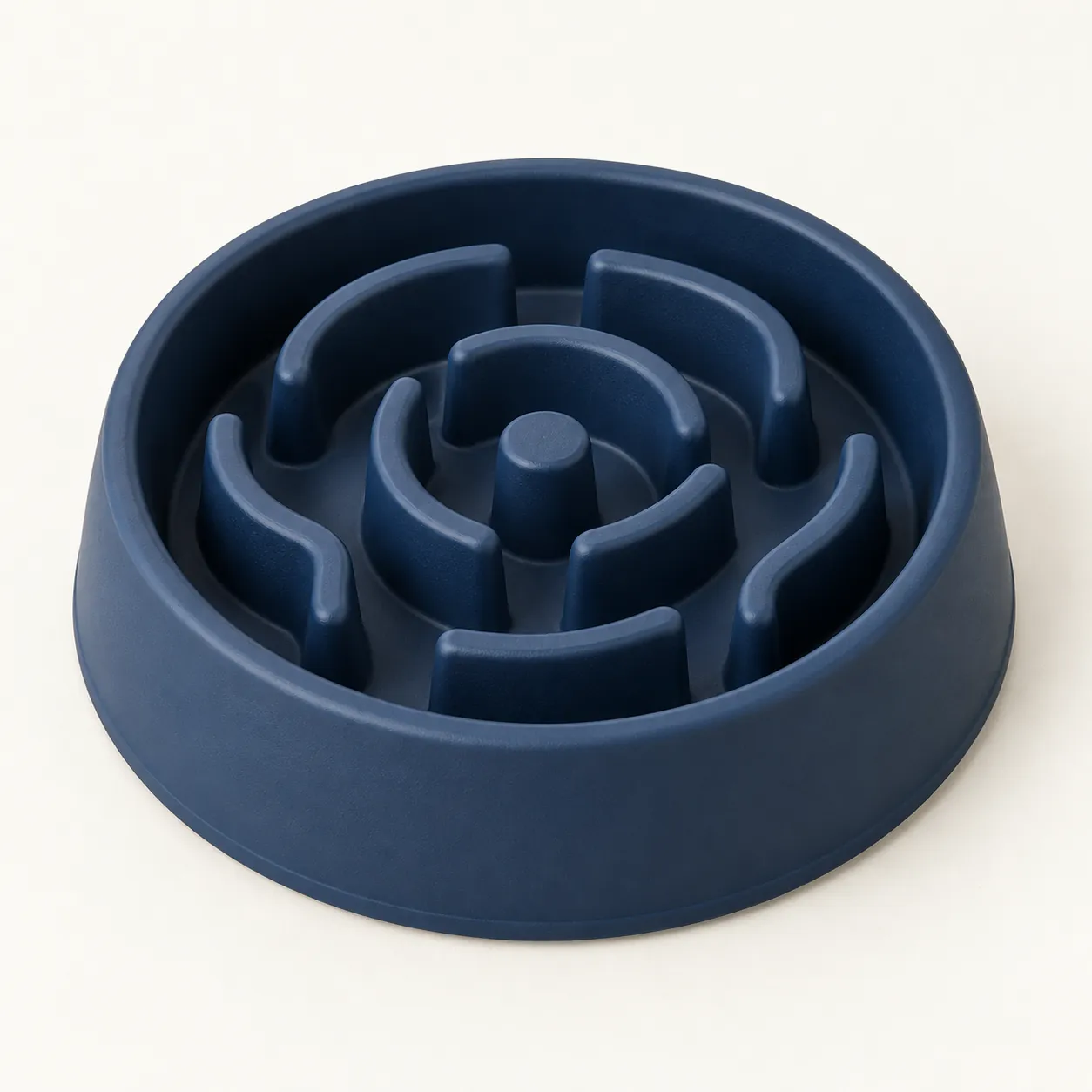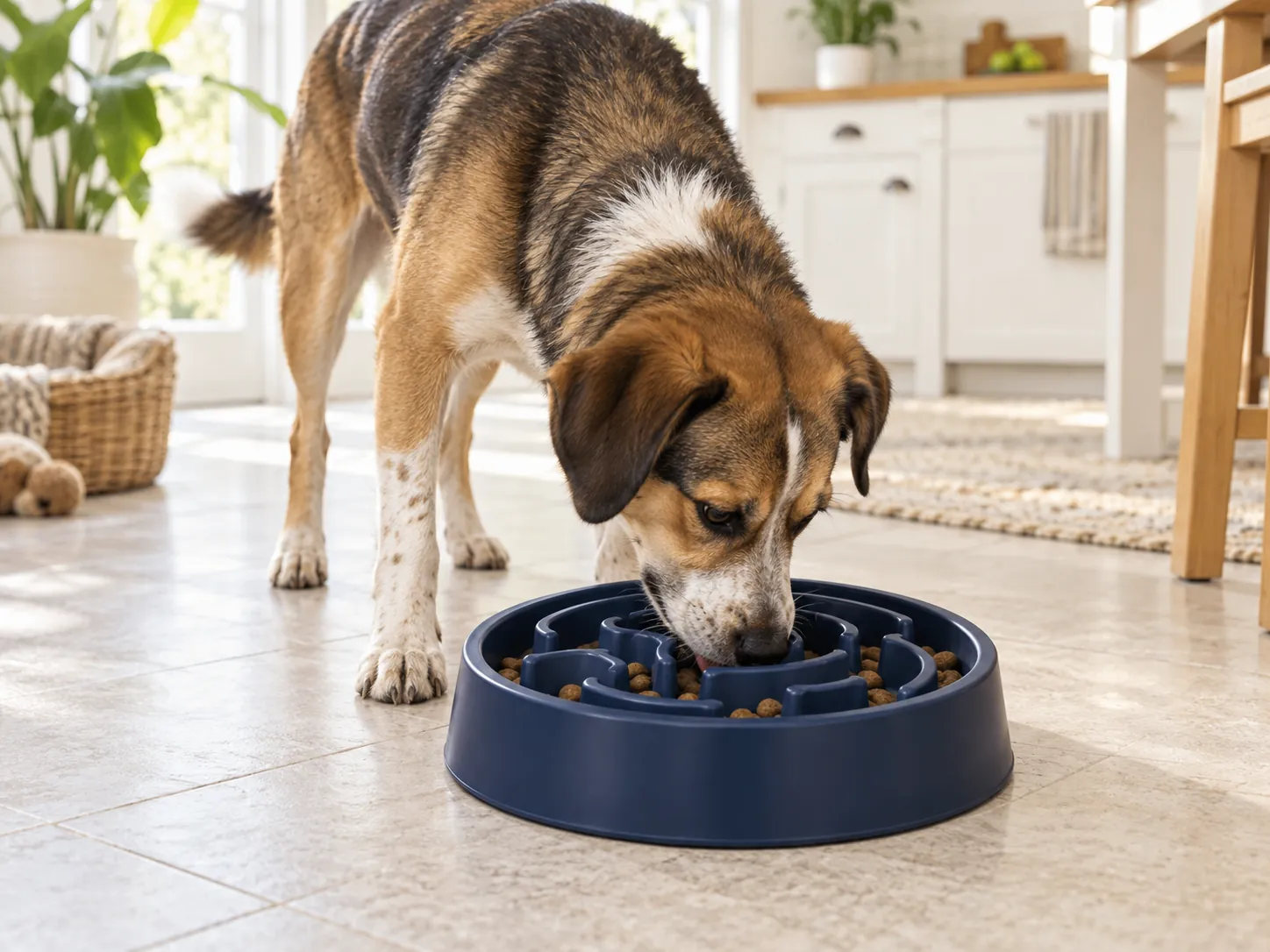
A slow feeder is a bowl with ridges or pockets that makes a dog work around the pattern to reach food. Choose one that fits the dog's muzzle and meal, start with an easy pattern, stay nearby during first use, and clean every groove afterward. It can make mealtime more interactive; it should not be presented as a medical safeguard or a fixed solution for fast eating.
Slow bowl, puzzle feeder, or ordinary bowl?
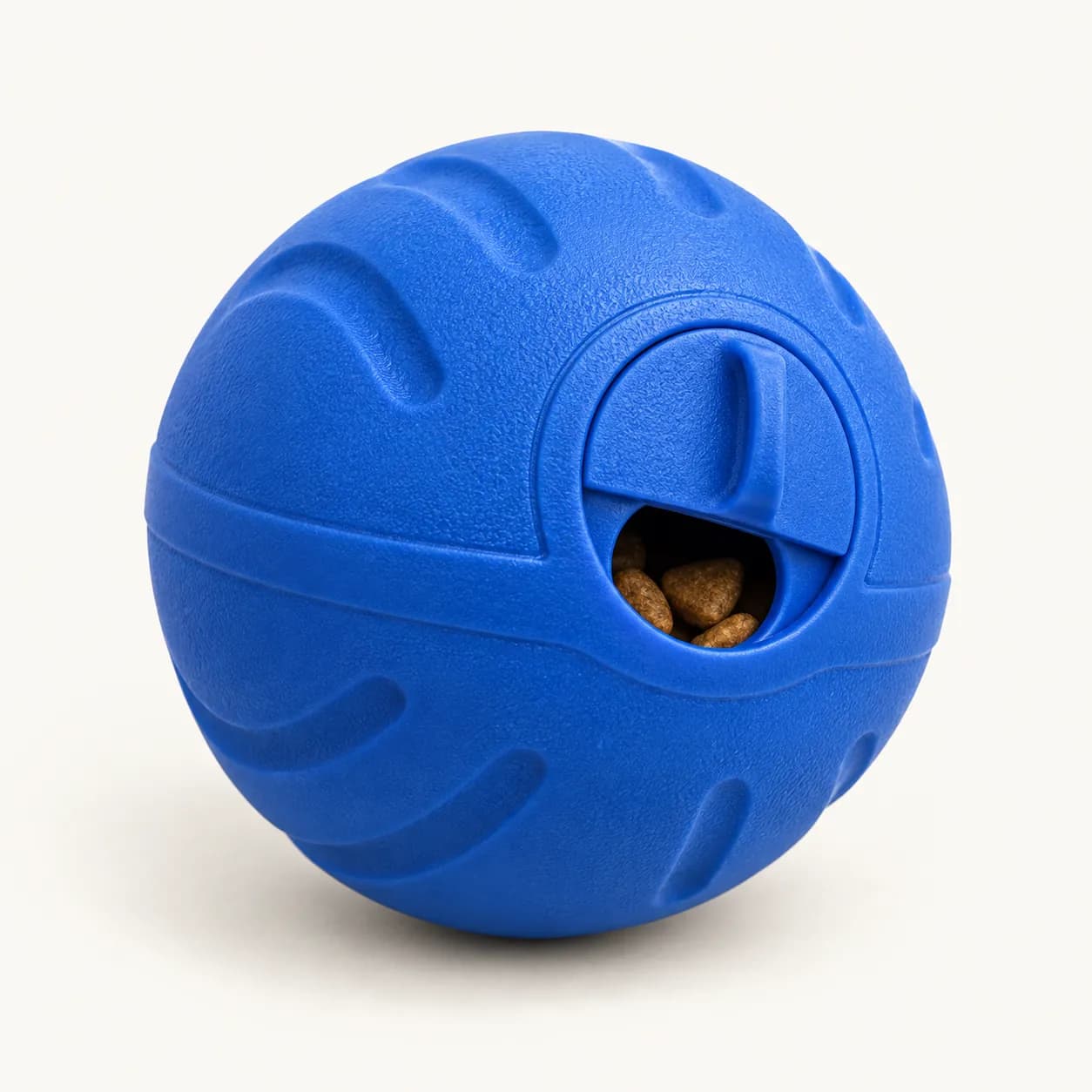
These tools solve slightly different practical problems. An ordinary bowl makes the meal readily available. A slow bowl keeps food visible but requires the dog to move around barriers. A puzzle feeder may hide food behind compartments or dispense it after the dog manipulates the toy. The AKC's dog bowl guide distinguishes slow bowls from puzzle feeders, while the ASPCA's enrichment guide treats food puzzles as a way to add activity to a meal.
| Format | Typical task | Best first check |
|---|---|---|
| Ordinary bowl | Eat an accessible meal | Comfortable height and stable placement |
| Slow feeder bowl | Reach food between ridges | Muzzle reaches all areas without scraping |
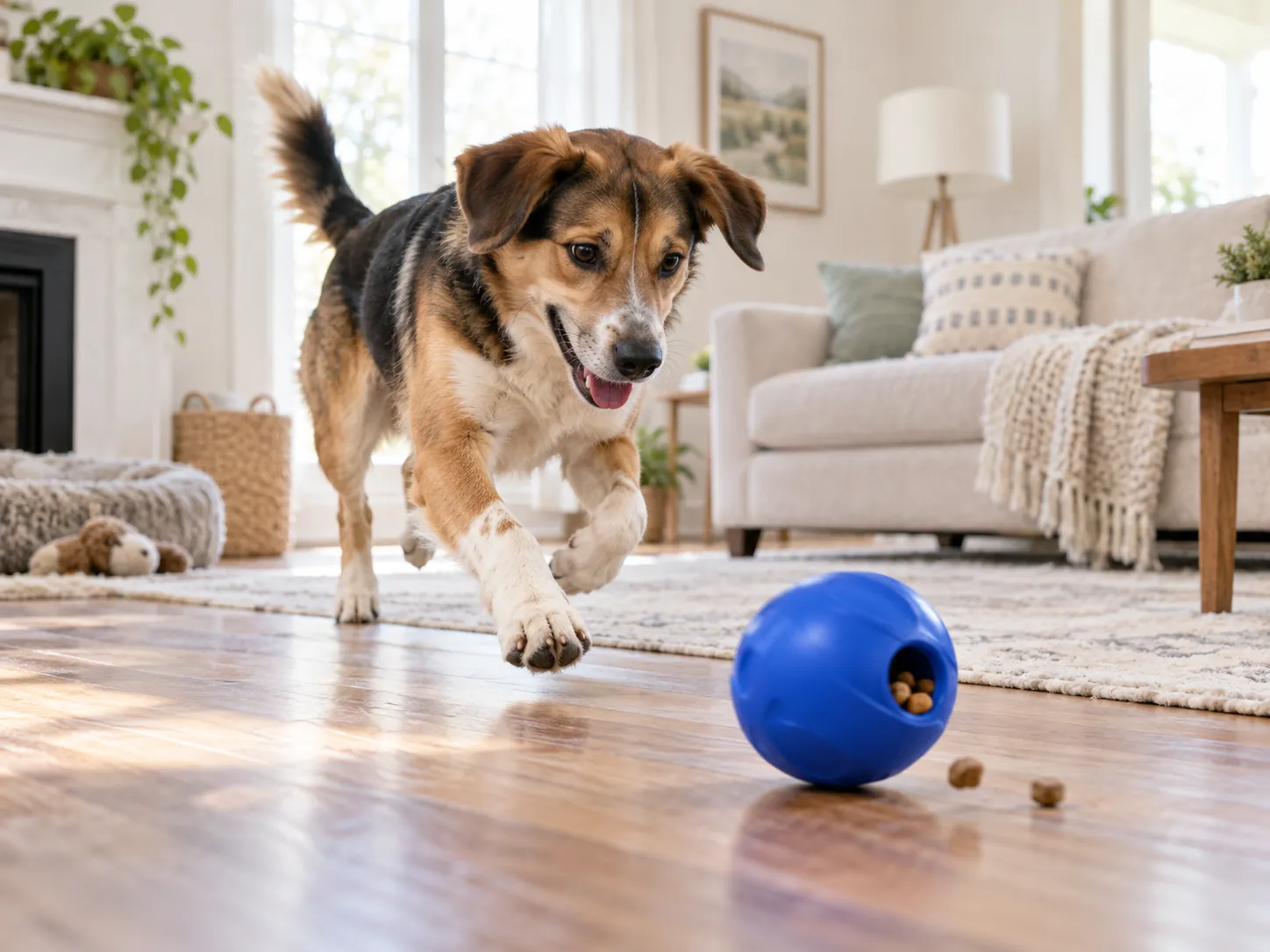
| Treat-dispensing toy | Move a toy to release food | Size, opening, and rolling area fit the dog |
| Lick mat | Lick a thin spread from texture | Dog licks rather than chews the mat |
The right choice depends on the dog, not the newest design. A dog that becomes frustrated with deep ridges might do better with a simpler bowl. A dog that enjoys nudging a ball may prefer a dispensing toy, but it needs a safe floor area and close supervision at first.
Choose by the dog in front of you
Check the maker's dimensions, recommended dog size, food-contact instructions, and care directions. Make sure the bowl is wide and shallow enough for your dog's muzzle to reach the food. A broad-faced dog may struggle with a narrow maze that another dog finds easy. The bowl should sit stably on the surface you use, and the portion should fit without piling food so high that the pattern has no effect.
Material and construction matter in everyday use. Inspect for sharp edges, seams that trap food, removable pieces, and surfaces your dog might chew. A bowl that looks attractive but cannot be cleaned thoroughly is a poor choice for repeated meals. Final specifications for Pawplay's planned Slow Bowl are not confirmed; use the published dimensions and care instructions when the product launches rather than treating a concept image as proof of fit.
If your dog has difficulty eating, dental pain, a medical condition, or a prescribed feeding approach, speak with your veterinarian before changing the feeding setup. The bowl is a practical feeding format, not a way to diagnose or manage a condition.
Introduce a slow feeder without a struggle
- Put the bowl where your dog normally eats, on a surface that does not slide.
- Add part of the dog's regular meal in the easiest-to-reach areas.
- Let the dog investigate while you watch. If needed, point out a visible piece of food.
- Add the rest of the meal only if the dog can reach the first portion comfortably.
- End the experiment if the dog paws frantically, tips the bowl, or gives up.
An easy first meal tells you more than a difficult challenge. Watch how your dog eats, including whether it pushes the bowl across the floor, bites the ridges, or leaves food behind. If the design does not work, a simpler pattern or an ordinary bowl is a sensible answer. Do not withhold a meal to make a dog solve a puzzle.
What a slow feeder can and cannot tell you
The AKC describes slow bowls as adding a challenge that can slow eating and make meals more engaging. That is a format description, not a promise about a health outcome for your individual dog. Do not claim a specific reduction in eating time without observing it, and do not assume a slower meal prevents bloat or another medical problem. If your dog has repeated vomiting, distress around meals, or a known medical risk, ask your veterinarian for a plan.
You can observe ordinary signs of fit: whether the dog can reach the food, seems willing to return to the bowl, and finishes the intended meal. If the dog gulps food despite the pattern, a different bowl may help you test another approach, but the first question is whether the dog is eating comfortably and safely.
Cleaning and safe use
Food stays in corners and seams. Wash the bowl after meals using the specific product's care instructions, inspect each ridge, rinse, and dry it. The AKC notes that bowls or mats used for wet food need washing after each meal. Check whether your particular bowl tolerates dishwashers; do not infer that from its appearance.
Supervise a new feeder and remove it if your dog chews off a piece. The ASPCA's chew guidance advises matching items to the dog's size and chewing habits and discarding worn items. Separate dogs at mealtime when needed, because a puzzle can increase competition over food. Keep the feeding area clean, and put the bowl away if your dog treats it as a chew toy after the meal.
Make mealtime interesting without buying another bowl
Try an easy food-search game with part of the normal meal in a clean, dog-safe area while you supervise. A small scatter of kibble can tell you whether your dog enjoys searching at all. The AKC's puzzle guide explains the general idea: a dog works to access food. If your dog prefers a simple search, there is no need to make every meal a complex puzzle. Keep the task comfortable, keep the portion familiar, and let the dog's response guide the next attempt.
Common questions
It is a food bowl with ridges or compartments that make the dog work around obstacles to reach a meal.
Do not rely on a bowl to prevent a medical emergency. Ask your veterinarian about your dog's individual risk and feeding plan.
Often, but check the specific bowl's instructions and wash it thoroughly after the meal.
Start with an easy pattern that lets your dog reach food without frustration, then adjust only if the dog enjoys the challenge.